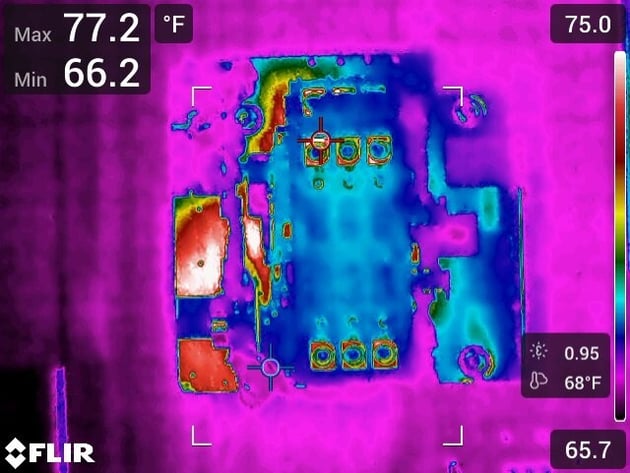
Everything may appear normal. The generator is ready, the automatic transfer switch is operating normally, and there are no alarms or visible signs of trouble.
Yet hidden within the electrical system, connections may be loosening, resistance may be increasing, and heat may be building unnoticed. That's where infrared thermal imaging adds another layer to preventive maintenance.
"Many electrical problems develop long before an alarm activates or warning lights become visible," says Marty Jenkins, Milton CAT’s New York General Service Manager. “Thermal imaging allows us to detect abnormal heat signatures while the equipment is operating normally, helping generator owners to address potential issues before an unexpected outage occurs."
Using a thermal camera, trained technicians inspect electrical equipment while it is operating, looking for heat patterns that may indicate loose connections, overloaded components, deteriorating contacts, or other developing issues.
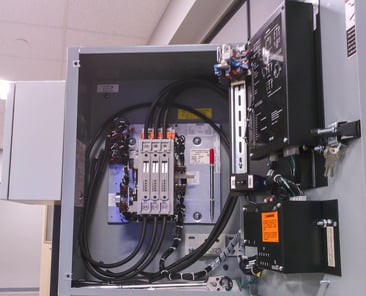
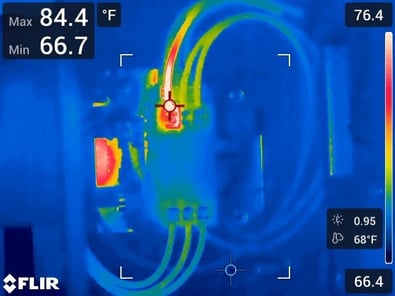
What the eye sees and what the thermal camera sees. An automatic transfer switch may appear to be operating normally while thermal imaging reveals an abnormal heat pattern that warrants further investigation.
For businesses that depend on their generator, identifying these conditions early can make the difference between a planned repair and an unexpected outage.
"Our goal is to identify potential problems early, before they affect reliability or lead to unplanned downtime,” says Jenkins.
More Than Finding Something Hot
Interpreting a thermal image requires more than simply locating the hottest spot.
"We're not just looking for things that are hot. We're looking for things that are hotter than they should be," explains Tracy Howard, a Milton CAT Power and Energy Technical Trainer and Electrical Safety Trainer.
Technicians compare temperatures between similar components, evaluate equipment load, and analyze heat patterns to determine whether further investigation is needed. A single connection that is noticeably warmer than surrounding components may indicate increased electrical resistance, contamination, or a loose connection.
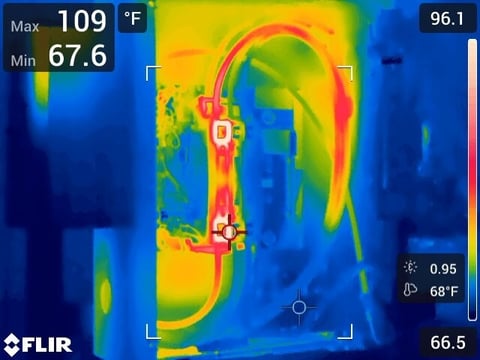 Thermal imaging can reveal temperature differences across electrical components that may warrant further investigation. Here, one area reaches 109°F and shows a noticeably different heat pattern from surrounding components. The thermal image provides a starting point for further investigation.
A thermal image is not a diagnosis. Instead, it provides a starting point for further evaluation, helping technicians determine whether maintenance, repair, or continued monitoring is appropriate.
"Thermal imaging gives us another diagnostic tool," says Howard. "It helps us identify potential concerns early and make informed maintenance recommendations based on the condition of the equipment."
Finding the Problem While Everything Still Works
Thermal imaging is most effective when the generator is energized and carrying load, allowing electrical issues to reveal themselves through heat before they impact operation.
During one routine preventive maintenance inspection at a healthcare facility, thermal imaging identified a connection inside an automatic transfer switch that was significantly hotter than the other phases. Although the switch appeared to be operating normally, further inspection found a loose connection that was generating excessive heat due to increased electrical resistance.
Because the condition was discovered early, repairs could be completed during a scheduled maintenance window rather than risking a possible ATS failure during a utility outage, when reliable backup power at a healthcare facility can be critical to patient care.
"Whether it's a healthcare facility, data center, manufacturing plant, or municipal operation, customers depend on their generator to perform when needed," says Jenkins. "Identifying a developing issue during planned maintenance instead of during an emergency is a significant advantage."
Making the Invisible Visible
Thermal imaging also helps generator owners better understand the condition of their equipment. Rather than relying solely on written inspection findings, they can see the temperature variations that support maintenance recommendations.
"One of the benefits of thermal imaging is that customers can actually see what we're seeing," says Jenkins. "The images provide valuable documentation and help explain why additional inspection or maintenance may be needed."
Thermal imaging is not a replacement for routine inspections and testing. Instead, it serves as another tool within a comprehensive preventive maintenance program.
As Howard puts it, "Thermal imaging isn't designed to find failures; it's designed to find the conditions that can lead to failures."
For facilities that rely on backup power, waiting for a hidden electrical issue to reveal itself during an outage can be costly and disruptive. Infrared thermal imaging helps uncover developing electrical problems before they affect reliability, allowing corrective action to be planned and completed on the owner's schedule.
"The goal isn't simply to find hot spots," says Jenkins. "It's to identify potential issues early, reduce the risk of unplanned downtime, and help ensure that backup power systems are ready when they're needed most."
Hidden electrical issues rarely improve with time. Milton CAT's infrared thermal imaging service helps uncover developing problems before they lead to costly downtime, emergency repairs, or power interruptions. Contact your Milton CAT Power and Energy Representative to learn how thermal imaging can strengthen your preventive maintenance program and help ensure your generator is ready when needed most.